
Don’t Get Bent Out of Shape Over Your Folding Solar Oven Design
Why Your Folding Solar Oven Design Choice Matters More Than You Think
folding solar oven design is one of the smartest ways to cook food without spending a cent on fuel — and in April 2026, more people than ever are building or buying one.
Here are the most popular folding solar oven designs at a glance:
| Design Type | Best For | Portability | Typical Temp |
|---|---|---|---|
| Pizza box (cardboard) | Beginners, kids, STEM | Very high | Up to 200°F |
| Panel cooker (corrugated plastic) | Camping, backpacking | Very high | Up to 300°F |
| Reflector oven (aluminum sheets) | Intermediate DIY | High | 250–350°F |
| Box oven (STEVEN/SUNSTOVE style) | Family cooking | Medium | 250–350°F |
| Vacuum tube kit (GoSun style) | Travel, speed | Very high | Up to 550°F |
Solar ovens work by combining four simple ideas: reflection, absorption, heat trapping, and insulation. That’s it. No gas. No charcoal. No electricity bill.
The best part? Some of the most effective designs fold completely flat and fit in a backpack. One popular DIY version folds down to just 8 by 9 by half an inch — small enough to slip into a large purse.
Whether you want to build one from a pizza box for under $5, or buy a commercial kit that hits 550°F in 20 minutes, there is a folding design that fits your needs and your budget.
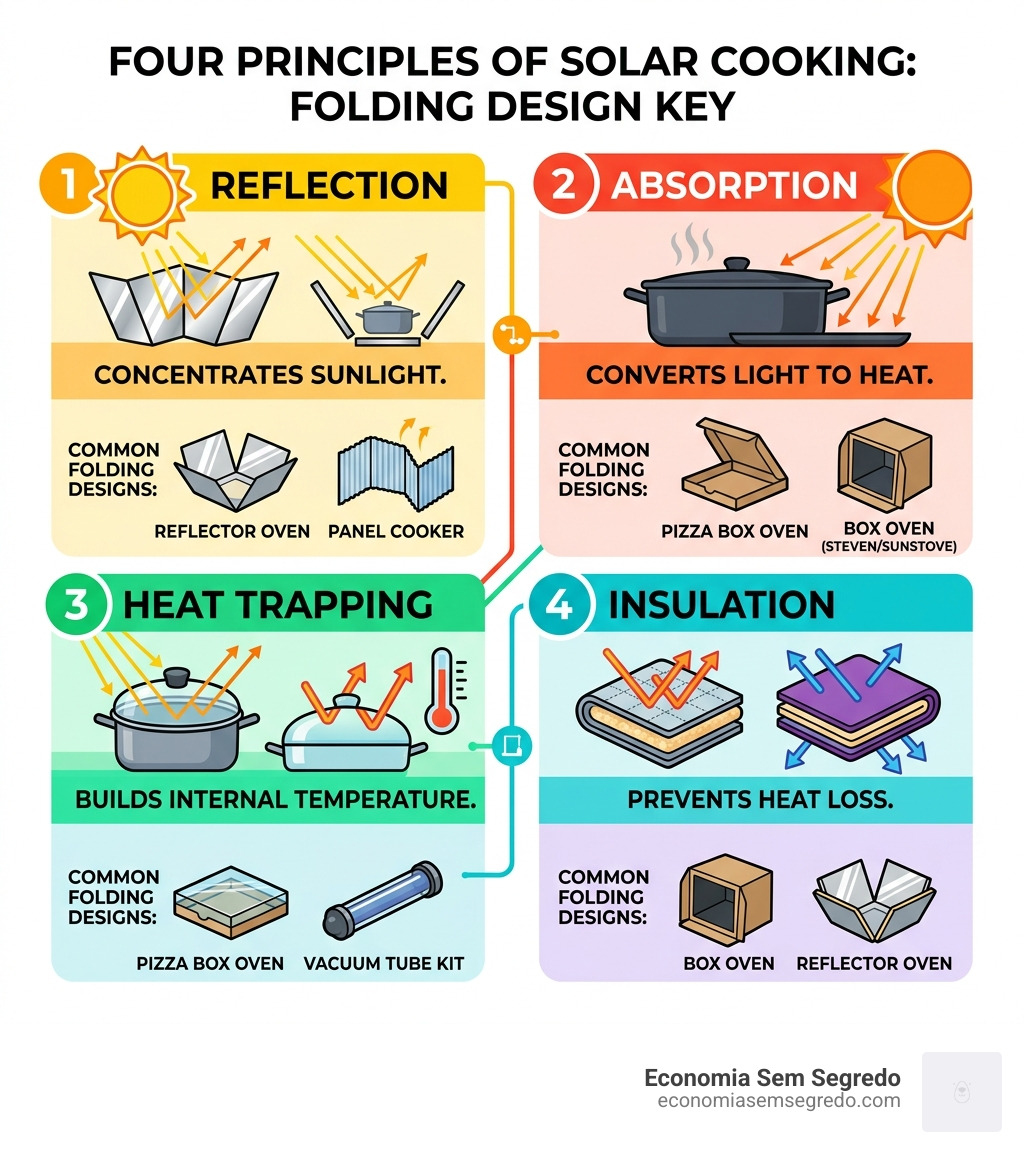
The Main Types of Folding Solar Oven Design
When we talk about folding solar oven design, we aren’t just talking about one specific “look.” There are several distinct families of solar cookers, each with its own folding mechanism and performance profile. Choosing the right one depends on whether you are prioritizing weight, cooking speed, or the ability to feed a large family.
Panel Cookers: The Lightweight Champions
Panel cookers are the most common entry point into portable solar cooking. These designs typically consist of several flat, reflective panels that fold together to form a funnel or bowl shape. They concentrate light onto a dark pot placed in the center, which is usually enclosed in a heat-resistant plastic bag to trap warmth.
The “Square Foot Solar Cooker” is a prime example. Made from an 18-by-24-inch piece of corrugated plastic, it folds down to a tiny 8-by-9-by-1/2-inch package. It’s waterproof, lightweight, and can cook a cup of rice in under 80 minutes.
Folding Box Ovens: The Reliable Workhorses
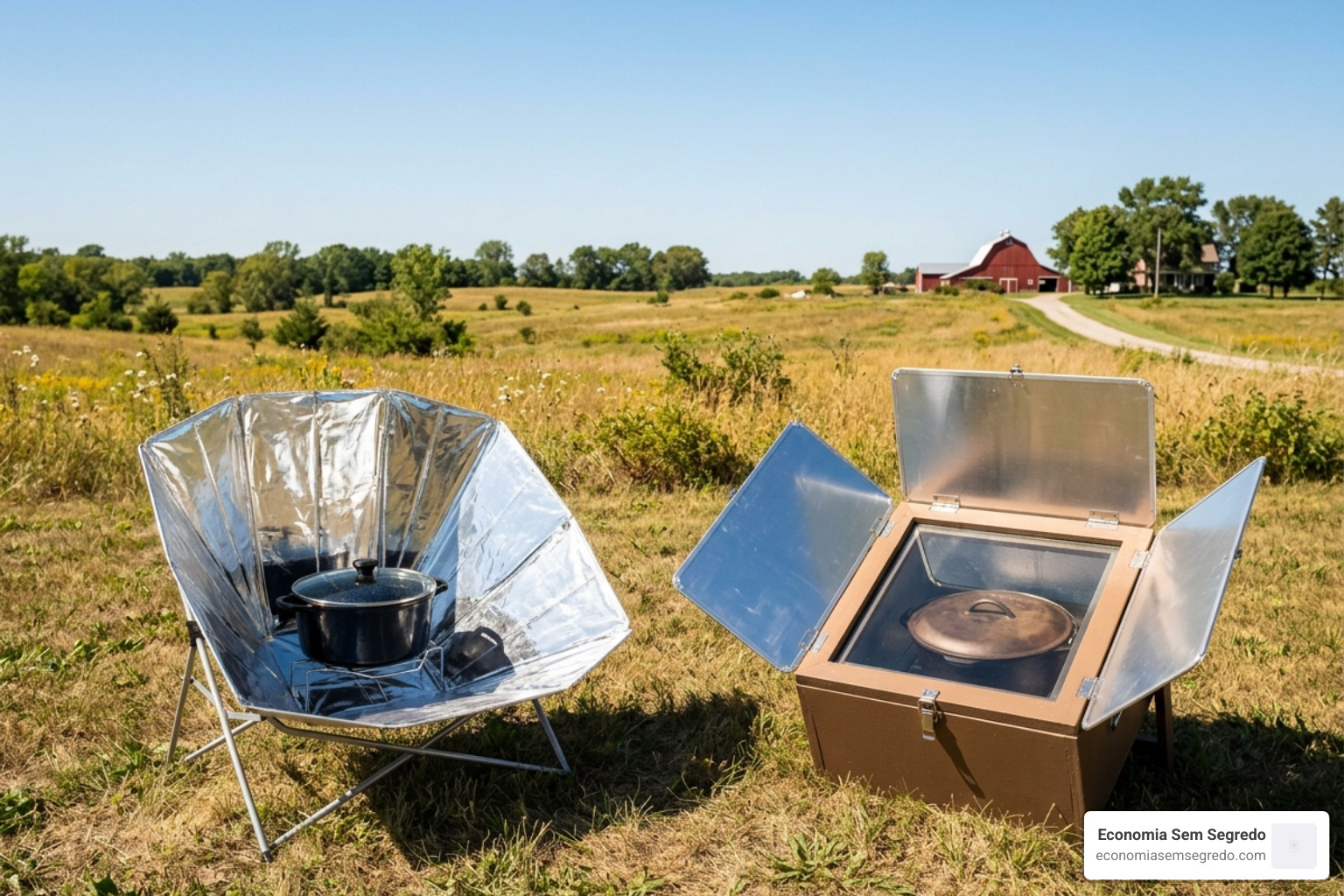
Box ovens are essentially insulated boxes with a transparent lid and reflective “wings.” While traditional box ovens are bulky, a smart folding solar oven design allows the reflectors and even the box itself to collapse.
A standout in this category is the Fabricated SUNSTOVES. These units are designed for mass production and extreme affordability. A fabricated SUNSTOVE weighs under 5 kg and is capable of cooking 5 to 6 liters of food. Because they are designed to nest or stack, you can fit ten of them in the back seat of a car. This makes them ideal for community distribution or emergency relief.
Parabolic and Reflector Ovens
Parabolic designs use a curved shape to focus light onto a single point. While highly efficient, they can be tricky to fold. However, “reflector ovens” like the Svante Fredén design use flat aluminum sheets and hinges to mimic this focus while folding completely flat for transport.
Vacuum Tube Cookers
These are the “high-tech” members of the family. Using a double-walled glass vacuum tube (similar to a thermos), these ovens trap heat so effectively that they can reach 550°F even in chilly weather. Commercial kits, like the GoSun, often feature reflectors that fold around the tube like a protective shell, making them incredibly durable for travel.
DIY Folding Solar Oven Design Guide
If you’re looking to save money—which we always encourage here at Economia Sem Segredo—building your own is the way to go. You don’t need a degree in engineering to create a functional folding solar oven design.
The Pizza Box Model (Beginner)
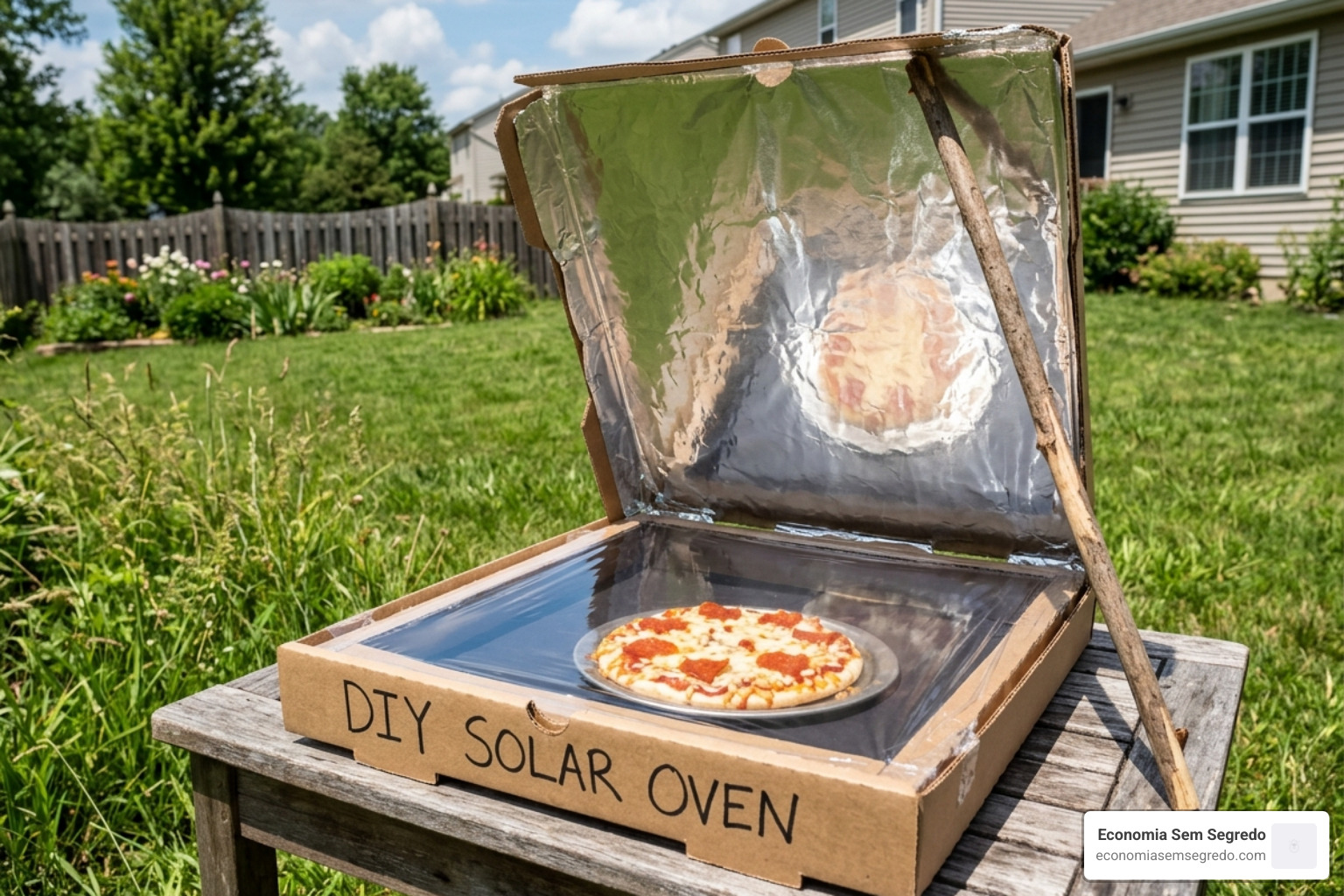
This is the classic science project that actually works. By cutting a flap in the lid of a pizza box and lining it with foil, you create a reflector. The “window” is made by stretching plastic wrap over the opening in the lid.
- The Reflector: Cut three sides of a square in the lid, leave the fourth side as a “hinge.” Cover the inside with smooth foil.
- The Window: Tape a double layer of clear plastic wrap over the hole you just created. This creates an airtight seal.
- The Absorber: Line the bottom of the box with black construction paper.
- Insulation: Roll up newspapers and place them around the inner edges of the box to prevent heat from leaking out.
The Svante Fredén Reflector Oven (Intermediate)
For those who want something more permanent, the How to build a foldable reflektor oven guide provides a blueprint for a professional-grade tool. This design uses 1mm aluminum sheets and long hinges (about 1700 mm worth) to create a folding structure that is both lightweight and incredibly sturdy.
The secret to this design is the “U-form” grating. This wire rack holds your food and is designed to be 2cm shorter than the front of the oven so it can be tucked inside when the whole unit is folded shut.
Materials for Your Folding Solar Oven Design
Choosing the right materials is the difference between a lukewarm snack and a piping hot meal.
- Reflectors: Aluminum foil is cheap, but Mylar (the shiny material in emergency blankets) is more durable. For advanced builds, 1mm aluminum sheets provide the best longevity.
- Structural Panels: Corrugated plastic (like yard signs) is waterproof and easy to fold using “half-cuts.” Foam core board is a great insulator but won’t last long in the rain.
- Glazing: High-quality plastic wrap works for temporary ovens, but a 1.5mm acrylic or polycarbonate sheet is much better for heat retention.
- The Pot: Always use a dark, thin-walled metal pot. Black absorbs all wavelengths of light and converts them to thermal energy.
Optimizing Your Folding Solar Oven Design for Efficiency
Building the oven is only half the battle. To get the best performance, you need to understand the geometry of sunlight.
The Magic Angles: 40 and 25
Research into folding solar oven design has shown that specific reflector angles can significantly reduce how often you need to move the oven. In a popular fold-up design, the center reflectors are set at 40 degrees from vertical, while the end panels are at 25 degrees.
This configuration creates a “sun window” of about 50 degrees. Why does this matter? It means you can leave your food to cook for 2 to 3 hours without having to adjust the oven to follow the sun. In a test, a cooker with these optimized angles heated 1.5 cups of water to 181°F in two hours, while a standard cooker only reached 144°F.
Thermal Mass and Insulation
If your oven is losing heat as fast as it’s gaining it, you’ll never reach baking temperatures.
- Newspaper Insulation: Crumpled newspaper is a fantastic, low-cost insulator. It won’t melt or smoke at standard solar cooking temperatures (usually under 300°F).
- Air Gaps: When using a panel cooker, placing your pot inside a clear oven bag creates a “greenhouse” air gap that is vital for heat retention.
- The Stone Trick: Placing a dark stone or tile inside the oven before preheating helps stabilize the temperature, acting as a “thermal battery” when clouds pass over.
| Feature | DIY Cardboard Oven | Professional Aluminum Reflector |
|---|---|---|
| Max Temp | 200°F – 250°F | 350°F – 550°F |
| Durability | Low (Keep dry) | High (Weatherproof) |
| Weight | ~1 lb | 5 – 10 lbs |
| Cost | Under $10 | $60 – $250 |
| Setup Time | 5 minutes | 1 – 2 minutes |
Advanced Engineering: From Sunstoves to Origami
The world of folding solar oven design isn’t limited to backyard DIY projects. Some of the most advanced engineering on the planet—and off it—uses these same principles.
The STEVEN Solar Oven
The STEVEN design is a high-performance DIY box oven. It uses a plywood exterior, sheet metal liner, and fiberglass insulation. What makes it “advanced” is its reflector cone. While many designs use four panels, the STEVEN oven can be upgraded to an 8-panel octagonal cone. This design catches light from more angles, allowing it to bake three loaves of bread in just 1.5 hours.
Space-Age Origami: The Sunflake XL
Believe it or not, NASA is looking at folding designs for the moon. The Technical details on folding mechanisms reveal how “origami-inspired” hinge arrays are being used to create massive solar arrays.
The Sunflake XL is a 50kW array that deploys to over 175 square meters but stows away in a tiny 1.875 cubic meter space. It uses a “Reverse Action Pyramid Hinge” that allows the structure to fold and unfold autonomously. While you might not need a lunar-grade hinge for your hot dogs, these same principles of “compact stowage vs. maximum surface area” are exactly what we look for in a great portable solar cooker.
Cooking Performance and Food Safety Rules
Safety first! We want you to save money on energy, not spend it on doctor bills. Solar cooking is a “low and slow” method, which means you need to be mindful of food safety.
The Bacterial Danger Zone
Bacteria thrive between 40°F and 140°F. Your goal is to get your food through this “danger zone” as quickly as possible and keep it above 140°F until it’s done.
- Poultry: Must reach an internal temp of 165°F.
- Ground Meats: Must reach 160°F.
- Whole Cuts (Steaks/Chops): 145°F.
- Water Pasteurization: Water is safe to drink if it reaches 160°F for at least 45 seconds or 145°F for 30 minutes.
Real-World Cooking Times
In a high-quality vacuum tube kit, you can cook a meal for two in 20 to 45 minutes. In a DIY panel cooker, expect things to take longer. A quart of water might take 1 hour and 45 minutes to go from 80°F to 162°F.
Pro Tip: Always preheat your oven for 20–30 minutes before putting food in. This gives the “absorber” surfaces a head start.
Troubleshooting and Real-World Performance
Even the best folding solar oven design can run into trouble. Here is how to fix common issues:
1. “It’s not getting hot enough!”
- Check the Foil: Is it wrinkled? Smooth foil acts like a mirror; wrinkled foil scatters light. Think “mirror,” not “crumpled moon rock.”
- Seal the Leaks: If you can feel warm air escaping from the lid or the plastic window, you’re losing your heat. Use tape or extra insulation to seal the gaps.
- Sun Alignment: If your shadow isn’t directly behind the oven, it’s not aligned. Re-aim every 20–30 minutes for maximum heat.
2. “The wind keeps blowing it over.”
Folding ovens are often lightweight (the Solar Oven Kit weighs only 2 lbs!). This makes them targets for the wind.
- Windbreaks: Place your oven near a wall or use a heavy rock (outside the reflector path!) to anchor it.
- Stakes: Some designs allow you to pin the corners of the panels into the ground.
3. “My food is cooking unevenly.”
- Rotate the Pot: Just like a microwave, solar ovens have “hot spots.” Rotate your pot 180 degrees halfway through the cooking time.
- Cut it Small: Smaller pieces of meat and vegetables cook much faster and more evenly in a solar environment.
Frequently Asked Questions about Folding Solar Ovens
How portable are folding solar ovens?
Incredibly portable! Most DIY panel designs, like the Square Foot Solar Cooker, fold to roughly the size of a laptop (8x9x1/2 inch) and weigh less than a pound. Commercial kits like the GoSun weigh about 2 lbs and fold into a sleek, backpack-friendly shape. Even the larger SUNSTOVE is designed so that 10 units can fit in the back seat of a standard car.
Can I use a folding solar oven on a cloudy day?
The “Shadow Rule” is your best guide: if you can see your shadow, you can cook. It will take longer, and you may need a more efficient design (like a vacuum tube), but it is possible. On very cloudy days, the oven acts more like a slow-cooker or a food warmer rather than a baker.
What are the best foods to cook in a folding design?
Stick to foods that love “low and slow” heat.
- Grains: 8 ounces of rice takes about 80 minutes.
- Snacks: Nachos, s’mores, and melted cheese roll-ups are perfect for beginners.
- Vegetables: Roasted apples with cinnamon or sliced potatoes work beautifully.
- Eggs: You can “hard-boil” eggs in a solar oven without using any water at all!
Conclusion: Your Path to Sustainable (and Cheaper) Living
At Economia Sem Segredo, we believe that managing your money isn’t just about spreadsheets—it’s about the tools you use every day. Investing time in a folding solar oven design is a dual win: you learn a valuable survival skill and you slash your energy costs.
Whether you’re building a $10 SUNSTOVE from scrap printing plates or carrying a 2 lb professional kit on your next camping trip, you’re tapping into a free, infinite energy source. It’s practical optimism at its best.
Ready to take the next step in your journey toward financial and energy independence?
