
Easy Solar Cooking Recipes for Your Next Pizza Box Project
Why Homemade Solar Oven Recipes Are Worth Trying Right Now
Homemade solar oven recipes let you cook real food — s’mores, nachos, rice, even chocolate cake — using nothing but sunlight and a cardboard box.
Here’s a quick look at what’s possible:
| Recipe | Cook Time | Difficulty |
|---|---|---|
| S’mores | 30–60 min | Beginner |
| Nachos | 20–30 min | Beginner |
| English muffin pizza | 40 min | Beginner |
| Rice | ~2.5 hours | Intermediate |
| Baked beans | 3–4 hours | Intermediate |
| Chocolate cake | 1.5–3 hours | Intermediate |
No gas. No electricity. No complicated setup.
A basic pizza box solar oven can reach 160–200°F on a clear sunny day — hot enough to melt chocolate, warm cheese, and slowly cook full meals.
Solar cooking isn’t just a fun science project. It’s also a genuinely free way to cook food once you’ve built the oven. For anyone looking to cut small costs and spend more time outdoors, it’s a surprisingly practical skill.
The best part? Building one takes about 2–3 hours with materials you likely already have at home.
How a DIY Solar Oven Works and Why You Should Build One
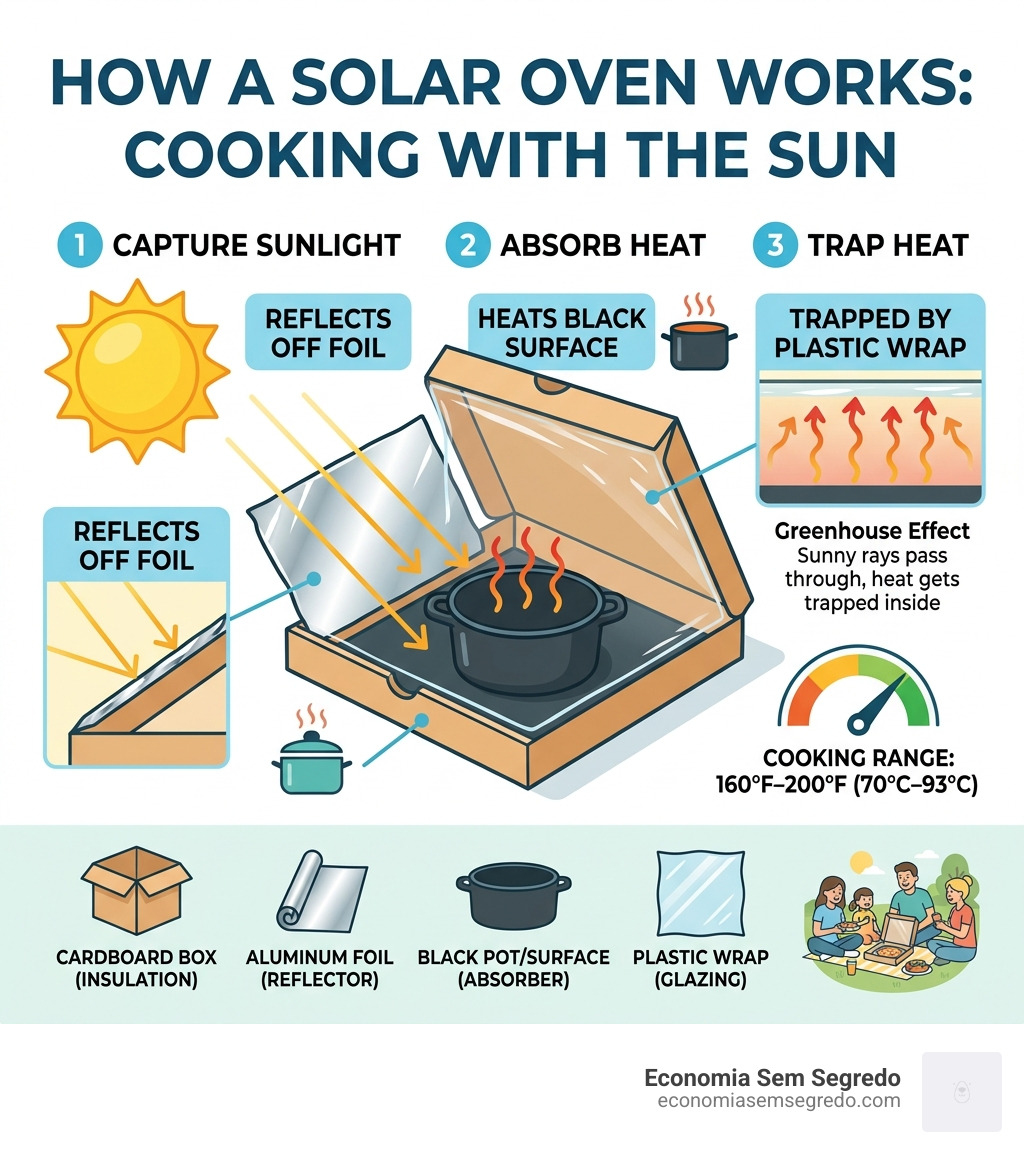
At Economia Sem Segredo, we love finding ways to simplify complex ideas, and solar cooking is the ultimate example of “high-tech” results from “low-tech” materials. Understanding how your oven works is the first step toward mastering homemade solar oven recipes.
Solar ovens rely on four main principles:
- Reflection: We use shiny surfaces, like aluminum foil, to bounce extra sunlight into the box. Think of it as a funnel for sunbeams.
- Absorption: Dark colors, especially black, turn light into heat. By lining the bottom of our oven with black paper or using dark pots, we catch that energy.
- Heat Trapping (The Greenhouse Effect): A clear cover (like plastic wrap or glass) lets sunlight in but prevents the resulting heat from escaping.
- Insulation: Good insulation keeps the heat inside the box so it doesn’t leak out into the cooler air.
Why should you bother? Beyond the obvious fun of a science experiment, solar cooking offers real financial savings. Every time we use the sun instead of a gas range or electric oven, we are utilizing 100% renewable, free energy. Especially in April 2026, as we look for more sustainable ways to live, solar cooking reduces our carbon footprint and keeps our kitchens cool on hot days.
For a deeper dive into these principles, you can check out this How to Make and Use a Solar Oven: Easy DIY Guide.
The Science of Solar Heat Retention
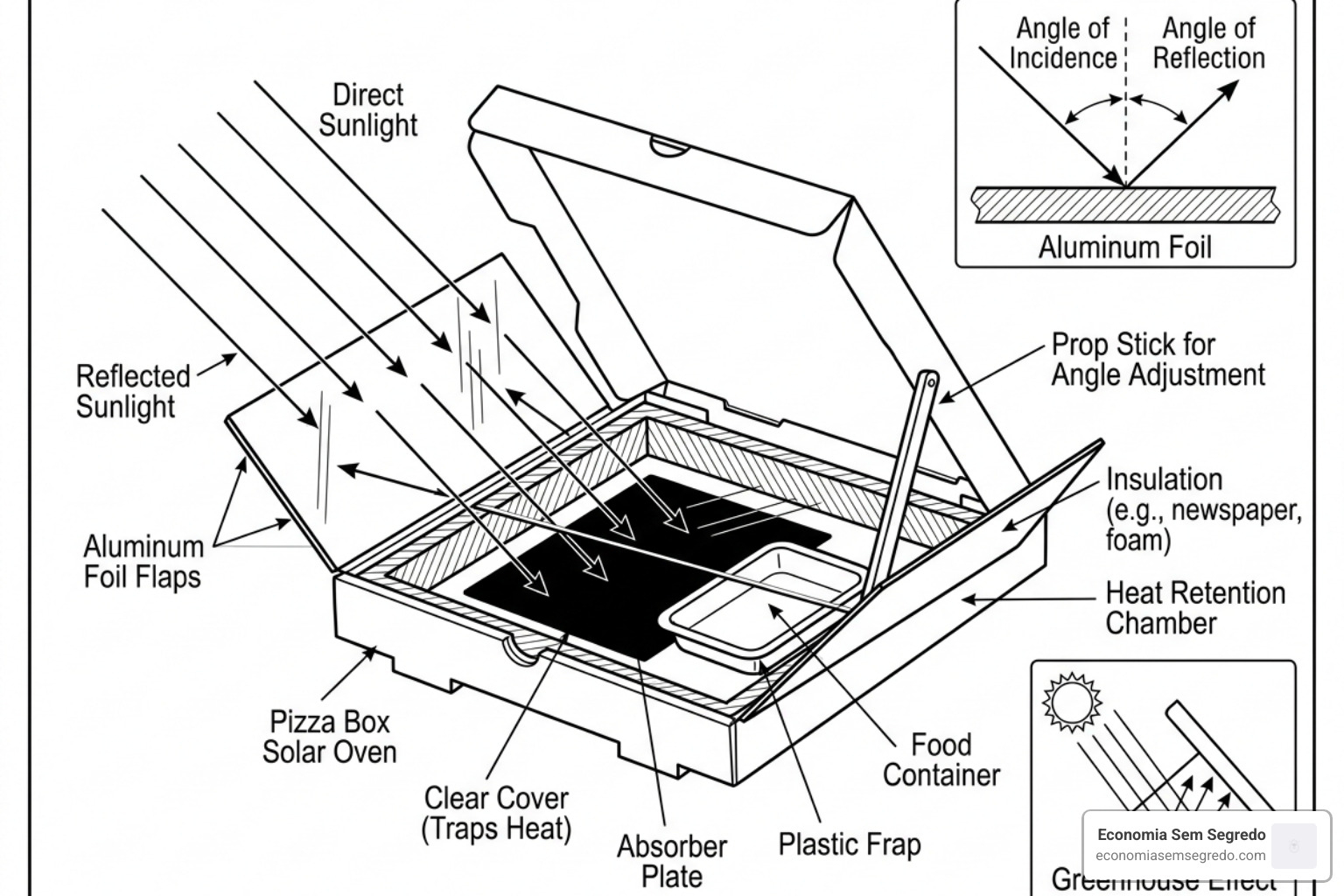
The “magic” happens when photons from the sun hit the black paper at the bottom of your oven. They convert into thermal energy. Because the plastic wrap acts as a barrier, that heat gets trapped. In a well-built pizza box model, temperatures typically hover between 160°F and 200°F. While this is lower than a traditional oven, it is perfect for slow-cooking and melting.
It is important to remember that solar cooking is a “scenic train, not a race car.” It takes longer, but the moisture retention is incredible. You almost never have to worry about burning your food!
Building Your First Solar Cooker: Materials and Steps
Before we jump into the homemade solar oven recipes, we need to build our “kitchen.” You likely have most of these items in your recycling bin or pantry right now.
Materials Needed:
- A clean pizza box (the lid should be attached)
- Aluminum foil
- Clear plastic wrap (heavy-duty is best)
- Black construction paper
- Non-toxic glue or tape
- A box cutter or utility knife (adult supervision required!)
- A wooden skewer or ruler to prop the lid
| Oven Design | Max Temp | Portability | Best For |
|---|---|---|---|
| Pizza Box | 160-200°F | High | Snacks, S’mores, Nachos |
| Cardboard Box-in-Box | 200-300°F | Medium | Rice, Beans, Small Roasts |
| Evacuated Tube | 300°F+ | Medium | Full meals, Winter cooking |
Step-by-Step Construction for Beginners
We’ve found that the most successful builds follow these simple steps, as highlighted in this guide on How to Make a DIY Solar Oven – Mombrite.
- Cut the Flap: On the lid of the pizza box, draw a square about 1 inch in from the edges. Cut three sides of this square, leaving the side attached to the hinge intact. Fold the flap up.
- Foil the Flap: Cover the underside of the flap with aluminum foil. Try to keep it as smooth as possible—think “mirror,” not “crumpled moon rock.” Smooth foil reflects much more light.
- Seal the Opening: Tape a double layer of plastic wrap over the hole you just cut in the lid. Ensure there are no gaps; we want an air-tight seal to trap the heat.
- Line the Interior: Line the bottom of the box with black construction paper. This is your “heat sink.” You can also line the sides of the box with foil to reflect even more light toward the center.
- Insulate (Optional but Recommended): To reach higher temperatures, stuff rolled-up newspaper into the gaps between the black paper and the sides of the box.
- Prop and Aim: Use a wooden skewer or a stick to prop the foil flap open at an angle that reflects sunlight directly through the plastic wrap and into the box.
Top 10 Homemade Solar Oven Recipes for Beginners
Now for the best part: the food! These homemade solar oven recipes have been tested in various conditions, from scorching 95°F days to slightly hazy afternoons.
Quick Snacks and Homemade Solar Oven Recipes for Kids
These recipes are perfect for preschool through 6th-grade kids because they focus on melting and simple assembly.
- Solar S’mores: The classic. Place graham cracker halves in the oven, top with a marshmallow and a piece of chocolate.
- Cook Time: 30–60 minutes.
- Tip: On a 95°F day, these usually reach gooey perfection in about 40 minutes.
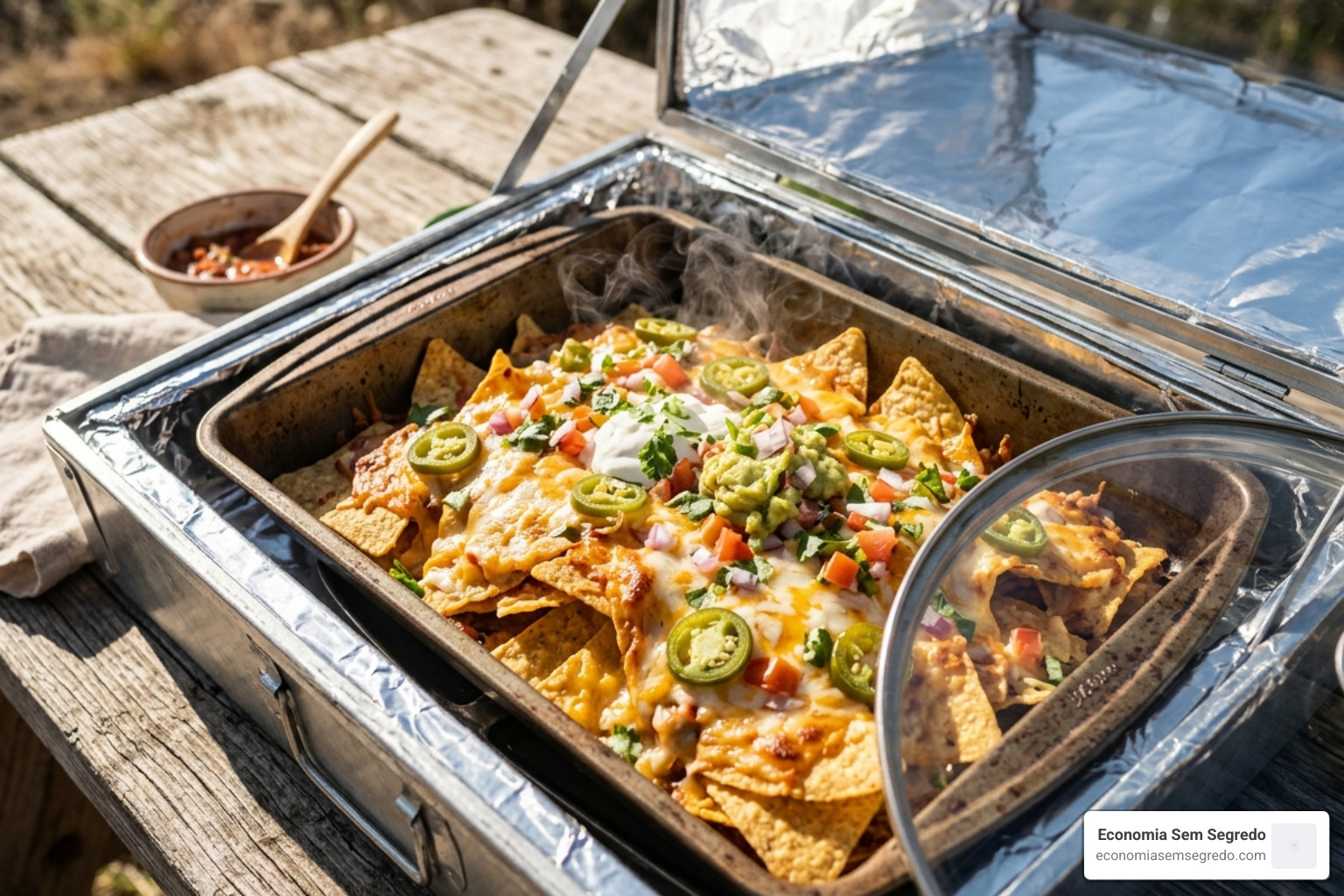
- Sun-Baked Nachos: Layer tortilla chips in a shallow pie tin and sprinkle generously with shredded cheese.
- Cook Time: 20–30 minutes.
- Tip: Use a dark-colored pan to speed up the melting.
- English Muffin Pizzas: Split an English muffin, add a spoonful of pizza sauce, cheese, and your favorite toppings.
- Cook Time: 40–50 minutes.
- Tip: Pre-cook any meat toppings, as a pizza box oven is best for melting cheese and warming the bread.
- Cheese Crisps (Quesadillas): Place a tortilla in the oven, cover half with cheese, and fold it over.
- Cook Time: 30–40 minutes.
- Quick Pizza Crackers: Use large saltines or buttery crackers as a base for mini-pizzas. These are bite-sized and cook very quickly!
- Cook Time: 20 minutes.
Hearty Meals and Advanced Homemade Solar Oven Recipes
If you’re using a more insulated box-in-box design or a commercial cooker, you can move beyond snacks into full meals.
- Solar Rice: Use a 2:1 ratio of water to rice in a dark, covered pot.
- Cook Time: 2–3 hours.
- Tip: Rinse the rice well first to prevent it from becoming too sticky.
- Perfect Baked Beans: Soak dried navy beans overnight. Combine with molasses, mustard, and onions in a dark pot.
- Cook Time: 3–5 hours.
- Tip: This is a great “set it and forget it” meal for a sunny Saturday morning.
- Sun-Roasted Beets: Scrub whole beets and place them in a dark dish with a tiny bit of water.
- Cook Time: 2–4 hours.
- Tip: The slow heat intensifies the natural sugars, making them incredibly sweet.
- Chocolate Chip Cookies: Place spoonfuls of dough on a dark baking sheet or a piece of foil.
- Cook Time: 1.5–2 hours.
- Tip: They won’t brown as much as in a traditional oven, but they will be soft and delicious.
- Breakfast Egg Frittata: Mix eggs, cheese, and pre-cooked veggies in a greased dark pan.
- Cook Time: 35–60 minutes.
- Tip: Use parchment paper to prevent sticking.
Maximizing Performance and Safety Precautions
To get the most out of your homemade solar oven recipes, you need to work with the sun, not against it.
- Track the Sun: The Earth moves, and so does your “fuel.” Re-aim your oven every 30 minutes to ensure the shadow of the flap is directly behind the box.
- Preheat Your Oven: Just like a kitchen stove, your solar oven needs to warm up. Give it 20–30 minutes in the sun before adding food.
- The Danger Zone: Food safety is paramount. Bacteria grow rapidly between 40°F and 140°F. Always use a thermometer to ensure meats reach safe internal temperatures (165°F for poultry, 160°F for ground meats). If your oven isn’t reaching these temps, stick to snacks like s’mores.
- Don’t Peek!: Every time you open the lid, you lose about 10–15 minutes of heat. Use a clear window so you can see your progress without opening the box.
- Use Oven Mitts: Even a cardboard box can get surprisingly hot! Always use protection when handling pans.
Frequently Asked Questions about Solar Ovens
How hot can a homemade pizza box solar oven actually get?
On a cloudless day with temperatures around 80°F, a well-constructed pizza box oven can easily reach 170°F to 200°F. More advanced DIY designs with better insulation and double-glazing can reach up to 300°F.
Can I use a solar oven during the winter months?
Yes, but with a caveat. While solar cooking is about light, not ambient temperature, standard pizza box ovens lose heat too quickly in the cold. If you want to cook in the winter, we recommend using an evacuated tube cooker or a highly insulated box-in-box design. These can cook food even when it’s freezing outside, as long as the sun is shining!
What are the best containers to use for solar cooking?
Dark, thin-walled metal containers are the gold standard. Black enameled “speckled” camping pots are perfect because they absorb heat quickly and the lids fit tightly to trap steam. Avoid shiny stainless steel or thick ceramic, as they reflect heat or take too long to warm up.
Conclusion
At Economia Sem Segredo, we believe that understanding the tools you use—whether they are financial spreadsheets or solar cookers—is the key to independence. Mastering homemade solar oven recipes is a fantastic way to blend education, sustainability, and fun. It teaches us patience, the value of renewable resources, and that sometimes, the best meals are the ones cooked slowly by the sun.
Whether you’re building a pizza box oven for a school project or looking to reduce your energy bills during the summer, the journey is incredibly rewarding. So, grab a box, some foil, and a bag of marshmallows, and start your solar cooking journey today!
For more guides on making life simpler and more cost-effective, visit us at Economia Sem Segredo.
