
Cooking with the Stars and Building Your Own Easy Solar Cooker
What Is an Easy Solar Cooker and How Do You Build One Fast?
An easy solar cooker is a DIY cooking device that uses reflected sunlight and trapped heat to cook food — no electricity, no gas, no fuel costs. The simplest version can be built from a pizza box in under an hour.
Here’s the quick version of how to build one:
- Cut a flap on the pizza box lid, leaving one side attached
- Cover the flap’s underside with smooth aluminum foil (shiny side out)
- Seal the opening with two layers of clear plastic wrap
- Line the inside bottom of the box with black construction paper
- Prop the foil flap open at an angle to aim sunlight into the box
- Place food inside, set it in direct sun, and wait 30–90 minutes
That’s it. A basic pizza box solar oven can reach 160–200°F in ideal conditions — enough to melt chocolate, puff marshmallows, and heat nachos.
The materials cost next to nothing, and most people already have everything at home.
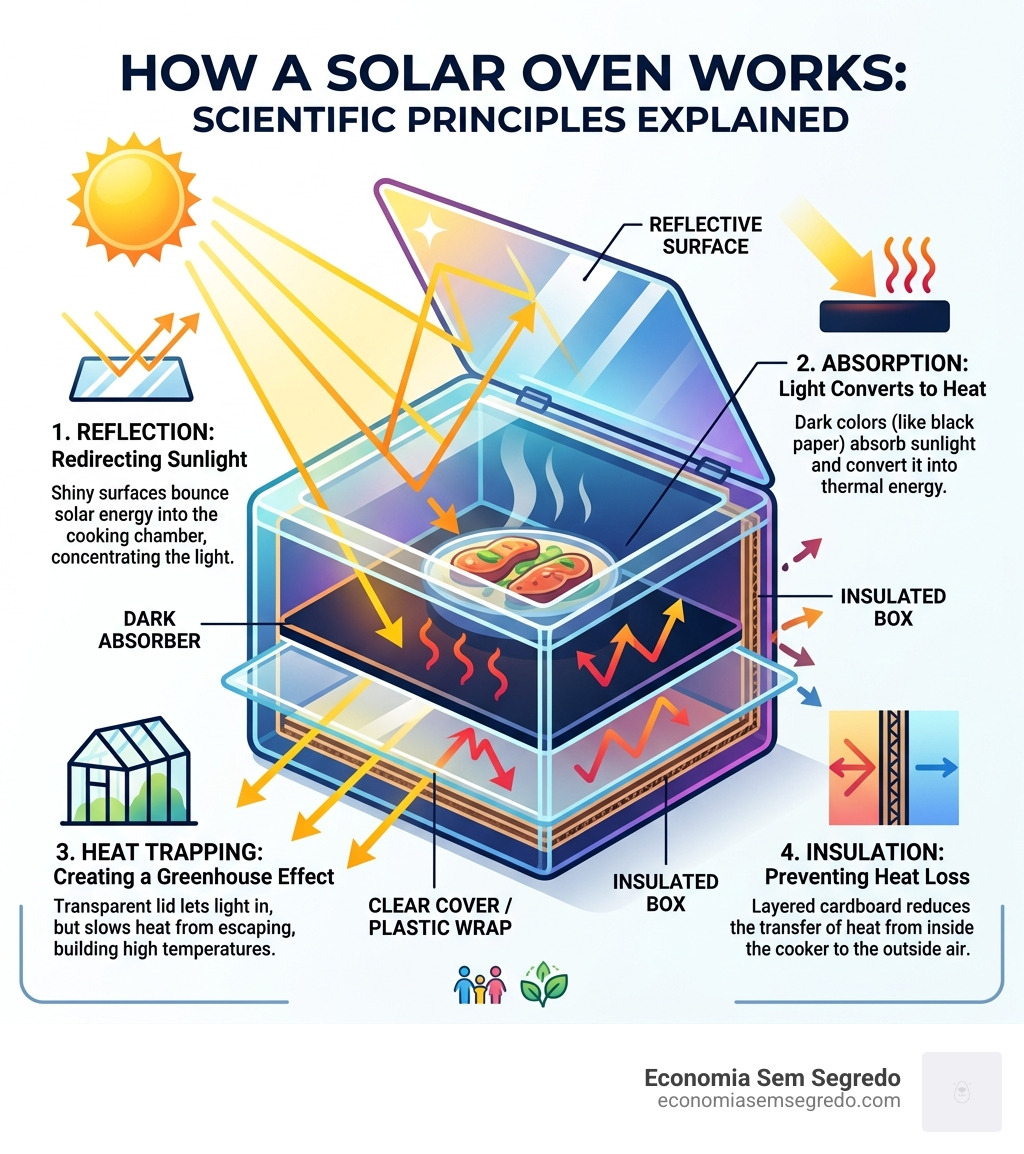
Solar cooking works through four simple principles:
- Reflection — shiny foil bounces sunlight into the cooking chamber
- Absorption — black paper converts light into heat
- Heat trapping — plastic wrap lets sunlight in but slows heat from escaping
- Insulation — layered cardboard reduces heat loss
It’s one of the most accessible renewable energy projects you can do today — whether you’re exploring sustainable living, looking for a fun family STEM activity, or simply want to cook something for free using the sun.
The Science Behind an Easy Solar Cooker
At Economia Sem Segredo, we love projects that turn “magic” into manageable science. Understanding why an easy solar cooker works is the first step toward mastering it. In April 2026, as energy costs continue to be a major part of every household budget, harnessing the free power of the sun isn’t just a science experiment—it’s a smart financial habit.
The fundamental science relies on converting light energy into thermal energy. When sunlight hits the reflective surface of your cooker, it is redirected into the box. Once inside, that light hits a dark surface and transforms into heat. This heat is then trapped by a transparent “window,” creating a miniature version of the greenhouse effect.
As noted in this How to Make and Use a Solar Oven: Easy DIY Guide, the process is less about high-tech machinery and more about clever design. By combining reflection, absorption, and insulation, we can create temperatures high enough to cook food safely without ever striking a match.
How an Easy Solar Cooker Traps Heat
The “magic” happens thanks to the greenhouse effect. When we use clear plastic wrap to seal the opening of our oven, we create a one-way street for energy. Short-wave solar radiation (sunlight) passes easily through the plastic. However, once that light hits the interior and turns into long-wave infrared radiation (heat), it can’t get back out as easily.
To make your easy solar cooker truly effective, you must ensure an airtight seal. Even a small gap can let your precious warm air escape, stalling your cooking progress. In ideal sunny conditions, this trapped heat can easily push the interior temperature past the 200°F threshold, which is more than enough for many snacks and basic pasteurization.
Why Your Easy Solar Cooker Needs Black Paper
If you’ve ever worn a black t-shirt on a summer day, you know that dark colors get hot. In a solar oven, black construction paper acts as a “heat sink.” While the aluminum foil is busy reflecting light, the black paper is busy absorbing it.
Light-colored surfaces reflect energy away, but dark, matte surfaces convert that light into thermal energy and then radiate it back toward your food. This energy retention is what keeps the “oven” hot even if a small cloud momentarily passes over the sun. Without that dark base, your food would just be sitting in a very bright, but relatively cool, box.
Step-by-Step Guide: Building Your Pizza Box Solar Oven
Building a solar oven is one of the most satisfying weekend projects you can undertake. It transitions from “arts and crafts” to “applied science with snacks” the moment you see that first marshmallow puff up.
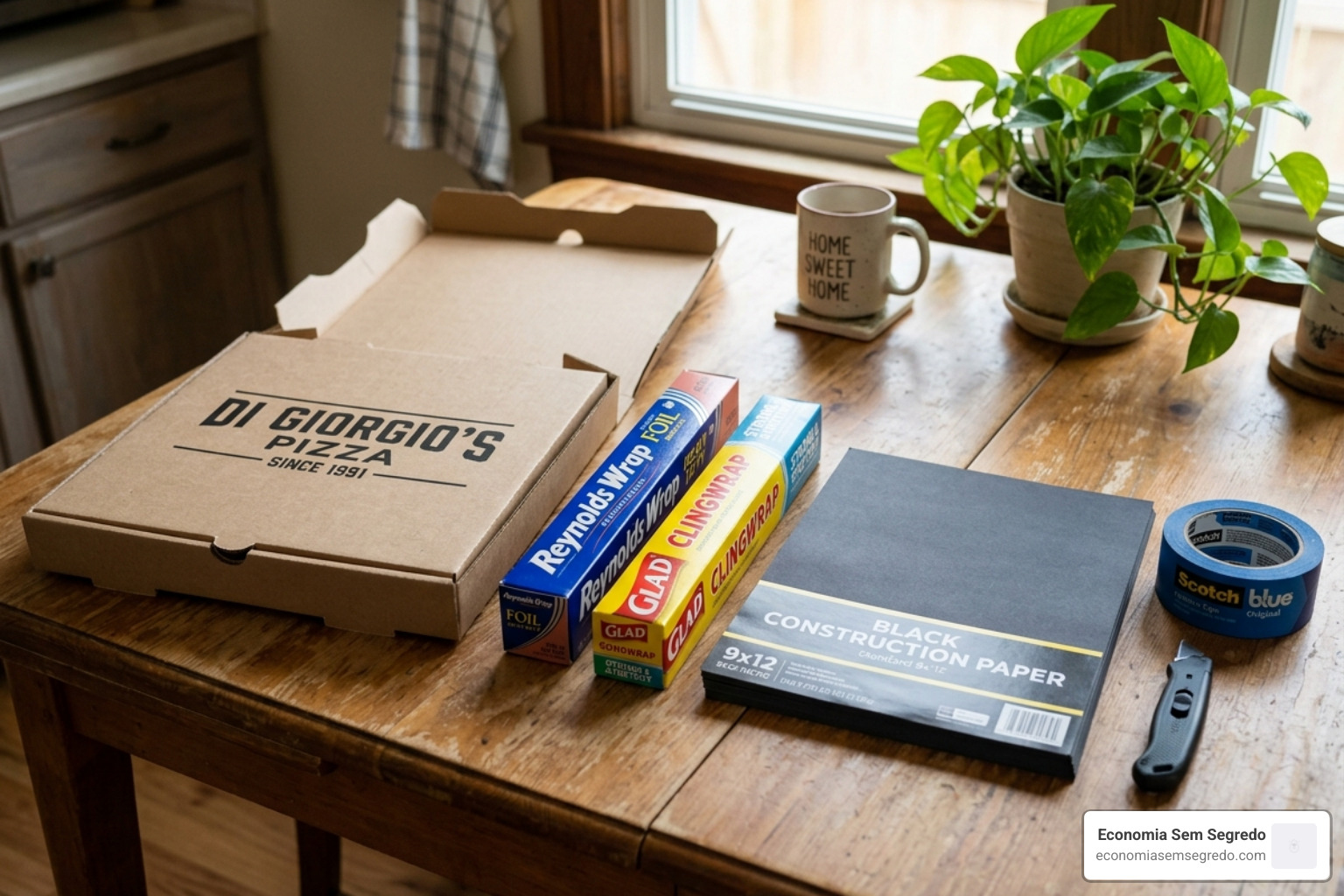
To get started, gather these common household items:
- One clean pizza box (the larger, the better)
- Aluminum foil
- Clear plastic wrap (heavy-duty is best)
- Black construction paper
- Non-toxic glue or tape
- A wooden skewer or ruler to prop the lid
- Utility knife or scissors (adult supervision required!)
For more complex designs, you can also look into How to Build A Simple Box-Style Solar Cooker – Earth Water Alliance, but for today, we are focusing on the ultra-accessible pizza box model.
Preparing the Reflector Flap
Using a utility knife, cut a square flap into the lid of the pizza box. Leave about a one-inch border around the edges, and leave one side of the square attached so it can fold back like a hinge.
Once the flap is cut, line the underside of it with aluminum foil. Here is a pro tip: smoothness matters. Wrinkled foil scatters light in different directions, but smooth foil acts like a mirror, concentrating sunlight directly into the chamber. Glue the foil down as flat as possible, ensuring the shiny side is facing out.
Sealing the Cooking Chamber
This is the most critical step for heat retention. Open the lid and tape a layer of clear plastic wrap over the opening you just cut. For better performance, we recommend a double-layer of plastic.
By taping one layer to the top of the opening and another to the underside, you create a small pocket of air. This acts as “glazing,” much like a double-paned window in a home, significantly reducing heat loss. Ensure there are no holes or gaps; you want this chamber to be as airtight as possible to prevent the “greenhouse” from leaking.
Setting Up the Heat Sink
Now, look at the bottom interior of the box. Line it completely with black construction paper. This is where your food will sit. To take your easy solar cooker to the next level, you can add insulation.
Crumple up old newspaper and stuff it into the sides of the box or underneath the black paper. This “wadding” creates an insulated barrier that prevents the heat from escaping through the bottom of the cardboard. If you are feeling extra fancy, you can even paint the exterior of the box black to help it soak up even more ambient heat from the surrounding air.
Maximizing Efficiency and Safety in Solar Cooking
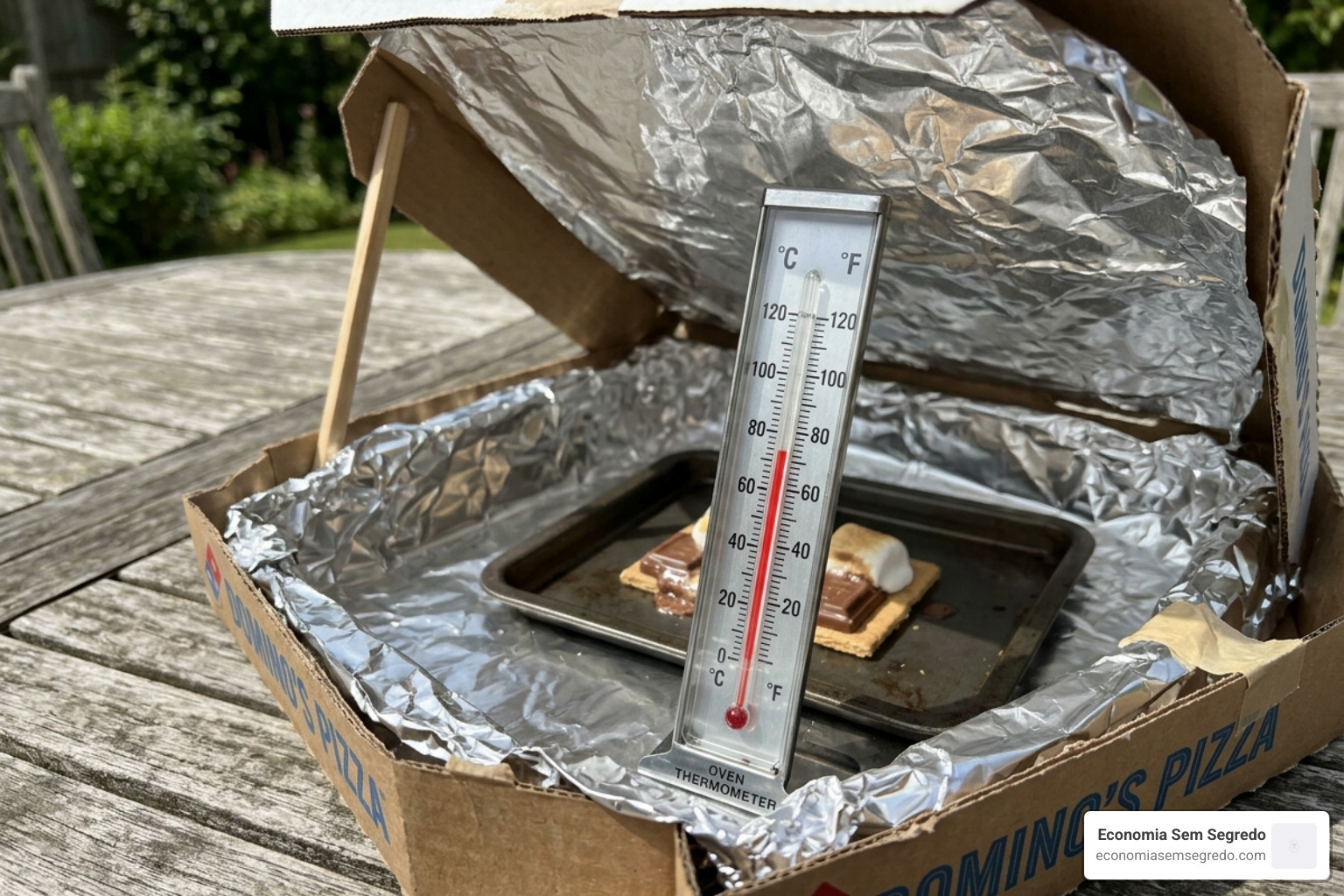
Once your oven is built, the real fun begins. However, solar cooking isn’t exactly like turning a knob on a gas range. It requires a bit of “sun-tracking” and patience. While a pizza box oven usually hits 200°F, advanced DIY models with high-accuracy tracking can reach temperatures of 350°F.
Positioning for Maximum Heat
To get the best results, you need to aim your reflector flap directly at the sun.
- The Shadow Test: Look at the shadow of your oven. If the shadow is perfectly rectangular and aligned with the box, you are on the right track.
- Angle Adjustment: Use your wooden skewer or a stick to prop the foil flap at an angle that bounces the brightest possible light onto your food.
- The 20-Minute Rule: The sun moves! To keep your oven at peak temperature, re-aim the box every 20 to 30 minutes.
Midday (between 10 AM and 2 PM) is the best time for solar cooking because the sun is at its highest and most intense. If it’s a windy day, try to set up a windbreak using a few bricks or another box. Wind is a “heat thief” that can pull warmth away from your oven’s exterior.
Essential Food Safety Precautions
We want your solar cooking experience to be delicious, not dangerous. Because solar ovens cook at lower temperatures than traditional ovens, you must be mindful of the “Bacterial Danger Zone” (between 40°F and 140°F).
Follow these safety guidelines:
- Use a Thermometer: Never guess. Use a probe thermometer to check the internal temperature of your food.
- Start Small: If you are a beginner, stick to low-risk foods like fruit, snacks, and vegetables before trying to cook raw meats.
- Safe Temperatures:
- Poultry must reach 165°F.
- Ground meats should hit 160°F.
- Leftovers must be reheated to 165°F.
- Preheat: Just like a regular oven, let your solar cooker sit in the sun for 20–30 minutes before putting food inside.
- Adult Supervision: Cutting cardboard and handling hot pans should always involve an adult.
Beyond S’mores: What to Cook in Your New Oven
Most people start with s’mores, but your easy solar cooker is capable of much more. Anything that benefits from “low and slow” cooking is a great candidate. Solar cooking preserves flavors beautifully because it doesn’t dry out food with the harsh, direct heat of a flame.
| Food Item | Estimated Cooking Time (at 90°F+ Sun) | Indicator of Doneness |
|---|---|---|
| S’mores | 30–40 Minutes | Chocolate is glossy; marshmallows puff |
| Nachos | 20–30 Minutes | Cheese is completely melted and bubbly |
| English Muffin Pizzas | 40–50 Minutes | Cheese is melted; sauce is steaming |
| Cheese Crisps | 40 Minutes | Tortilla is warm; cheese is melted |
| Apple Slices w/ Cinnamon | 60 Minutes | Apples are soft and fragrant |
Comparing Solar vs. Traditional Ovens
Why bother with a cardboard box when you have a kitchen full of appliances? For us at Economia Sem Segredo, the answer is simple: financial and environmental freedom.
Traditional ovens use a massive amount of energy to preheat and maintain high temperatures. A solar cooker has zero fuel cost. It is completely eco-friendly and produces no smoke or CO2. Furthermore, because solar ovens act like slow cookers, they are excellent at moisture retention. Your food won’t burn as easily, and flavors have more time to meld together. Think of it as a scenic train ride versus a race car; it takes longer, but the results are often more enjoyable.
Advanced DIY Solar Projects
Once you’ve mastered the pizza box, you might want to upgrade your backyard kitchen. The world of solar cooking is vast:
- Solar Box Cookers: More permanent versions made of wood or heavy plastic with better insulation can reach 300°F.
- Parabolic Reflectors: These look like satellite dishes and concentrate light to a single point. They can reach 650°F in minutes, allowing you to actually fry or grill food!
- Panel Cookers: These use large reflective panels to surround a dark pot placed inside a high-temperature cooking bag.
Frequently Asked Questions about Easy Solar Cookers
How long does it take to build a basic solar cooker?
If you have your materials ready, the active “build time” is only about 20 to 30 minutes. It is a perfect afternoon project. Once built, you can use it immediately!
Can a DIY solar cooker get hot enough to kill bacteria?
Yes. In ideal sunny conditions, even a simple pizza box oven can reach 160°F to 200°F. Since water pasteurization occurs at 150°F and most bacteria are killed at 160°F, a well-built cooker is a viable tool for basic sterilization and safe cooking.
What happens if it is cloudy or windy?
Cloudy days will significantly slow down or stop the cooking process. If a cloud passes by, your temperature will dip. Wind can also steal heat from the box. To fight this, use extra insulation (like the newspaper wadding mentioned earlier) and try to find a sheltered, sunny spot.
Conclusion
At Economia Sem Segredo, we believe that understanding the tools around us is the key to financial and personal empowerment. Building an easy solar cooker is more than just a fun experiment—it’s a lesson in how we can use free, sustainable energy to meet our daily needs.
By using simple materials like pizza boxes and foil, you’re not just saving a few cents on your utility bill; you’re developing a mindset of resourcefulness. Whether you’re melting s’mores with the kids or exploring off-grid cooking techniques, the sun is a reliable, free partner in your kitchen.
Ready to dive deeper into smart equipment and DIY guides? Check out More info about personal finance and equipment guides to see how we simplify the complex world of money and household management. Happy cooking, and may your skies always be clear!
